

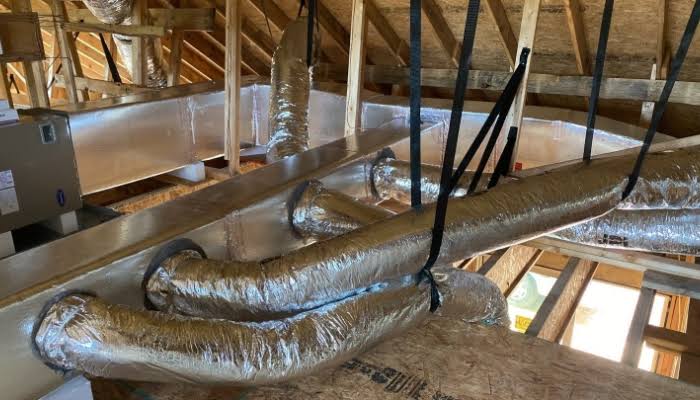
Mechanical ventilation is no longer a luxury feature. In modern residential, commercial, and industrial buildings, it is a core system that directly affects air quality, health, comfort, and productivity. Poor ventilation leads to heat buildup, stale air, moisture problems, and long-term structural damage. Properly designed mechanical ventilation prevents all of this.
Unlike natural ventilation, which relies on open windows and air movement that cannot be controlled, mechanical ventilation provides consistent and measurable airflow regardless of weather or building layout.
What Is Mechanical Ventilation?
Mechanical ventilation uses powered equipment such as fans, ducts, and air handling units to supply fresh air and remove stale or contaminated air from indoor spaces. These systems are engineered to meet specific airflow requirements based on room size, occupancy, and usage.
Mechanical ventilation systems are common in offices, hospitals, schools, factories, kitchens, shopping malls, and increasingly in modern homes where airtight construction limits natural airflow.
Types of Mechanical Ventilation Systems
There are several forms of mechanical ventilation, each serving a specific purpose.
Supply ventilation systems introduce fresh outdoor air into a building while forcing stale air out through leakage points. These systems are simple but require proper filtration to prevent dust and pollutants from entering indoor spaces.
Exhaust ventilation systems remove polluted or humid air from specific areas such as kitchens, bathrooms, and industrial zones. They are effective for moisture and odor control but must be balanced to avoid negative pressure issues.
Balanced ventilation systems combine both supply and exhaust functions. They control airflow precisely and are often used in commercial and institutional buildings where air quality standards are strict.
Heat recovery ventilation systems improve energy efficiency by transferring heat between outgoing and incoming air. This reduces cooling or heating losses while maintaining continuous fresh air supply.
Why Mechanical Ventilation Is Critical in Kenya
Kenya’s climate presents unique challenges. High temperatures, dust, humidity in coastal regions, and increasing urban pollution make proper ventilation essential.
Many buildings suffer from poor indoor air quality due to sealed windows, overcrowding, and inadequate airflow planning. Mechanical ventilation addresses these problems by controlling air exchange and preventing heat and pollutant buildup.
In commercial spaces, poor ventilation reduces worker productivity and increases health complaints. In residential buildings, it contributes to mold growth, odors, and respiratory issues.
Mechanical ventilation also plays a critical role in compliance with health and safety standards, especially in hospitals, laboratories, food processing plants, and commercial kitchens.
Key Benefits of Proper Mechanical Ventilation
Effective mechanical ventilation improves indoor air quality by removing carbon dioxide, odors, smoke, and airborne contaminants.
It regulates indoor temperatures by supporting cooling systems and reducing heat accumulation.
Ventilation systems also control humidity levels, preventing condensation, mold growth, and corrosion of building materials.
In industrial and commercial environments, mechanical ventilation protects equipment, preserves products, and ensures safer working conditions.
Design and Installation Matter More Than Equipment
A common mistake is focusing on equipment brands while ignoring system design. Poor duct layout, incorrect fan sizing, and inadequate air balancing result in noisy, inefficient systems that fail to perform.
Proper mechanical ventilation requires accurate airflow calculations, well-designed ductwork, correct fan selection, and professional installation. Maintenance access must also be considered from the start.
Without this, even expensive systems will underperform and consume excessive energy.
Conclusion
Mechanical ventilation is a fundamental building system, not an optional add-on. When properly designed and installed, it improves comfort, protects health, and extends the lifespan of both buildings and HVAC equipment.
Ignoring ventilation leads to hidden costs that appear later as health problems, repairs, and energy waste. Investing in a well-engineered mechanical ventilation system is a practical decision with long-term benefits.
.
Recent Comments